Showing posts with label rogarshevsky. Show all posts

Tuesday, April 17, 2012

The 1940 Census: Reading Between the Lines

As you may have heard, the 1940 United States census records were released to the public earlier this month. It probably isn’t surprising that this new information is exciting for historians, but lots of other people are curious too: two million users tried to access the census records on the first day they were available, crashing the National Archives web site.

Although our historic tenement at 97 Orchard Street was closed to residents in 1935, the release of the 1940 census still means a lot to us, since it reveals so much about the history of 103 Orchard Street, the site of our new Visitor and Education Center. The upper floors of 103 Orchard have been continuously occupied by residential tenants since the building was completed in 1888. We have a lot to learn about the people who have lived there: What did they do? How big were their families? What languages did they speak?

In 1940, Americans were still feeling the impact of the Great Depression, with national unemployment at 16.8 percent. Given this, it makes sense that there were more questions about employment in this census than in those of previous years. Anyone over the age of 14 was asked whether they worked, and specifically whether they were employed by one of three government-sponsored programs: the Civilian Conservation Corps, the Works Projects Administration, or the National Youth Administration.


A "Test Census" Enumerator at work in 1939; Image courtesy Life Magazine

At 103 Orchard Street, almost half of the heads of household reported that they were employed as proprietors of businesses – things like retail men’s hats, retail men’s clothing, and printing. We know that two of these businesses--Feltly Hats and The Orchard Street Printing Company--were located at 97 Orchard Street in 1940. They were owned by the Hafter and Solomon Families, respectively.

There are other connections between our two buildings: two families residing at 103 Orchard, the Hafters and the Rosenthals, were former residents of 97 Orchard who moved down the block when the building was condemned in 1935. Samuel Rosenthal was once known as Samuel Rogarshevsky; we tell his family’s story on our “Sweatshop Workers” tour.


Sam Rogarshevsky (Rosenthal) in the backyard at 97 Orchard Street
on his wedding day in 1919.


Though he was once an aspiring boxer who nicknamed himself Rocky, by 1940 Samuel Rosenthal reported that we was working as a chauffeur for a mortician, which probably meant he drove a hearse. His wife, Lillian, worked as a “squad leader” for the Dept of Commerce. Their 20 year old son Albert worked as a clerk in a candy store.

We’ve just begun to delve into the amazing wealth of information in the 1940 census, so we’ll have a lot more to share in the months to come!

-- Posted by Director of Curatorial Affairs David Favaloro and Public Relations Manager Kira Garcia

Monday, March 21, 2011

"Piecing it Together" and the Impact of the Triangle Shirtwaist Factory Fire on Immigrant Life: An Educator's Perspective

I’m embarrassed to admit that I don’t remember learning about the Triangle Shirtwaist Factory Fire growing up in Tennessee. Maybe it wasn’t taught at my school. Maybe I tuned out during that unit.

I’m even more embarrassed to admit that, despite 4 years in college as a history major, it was not until I became an educator at the Tenement Museum that I had more than a superficial understanding of what had happened at 19 Washington Place on March 25, 1911. Since I first began working with the Museum, virtually every "Piecing It Together" tour I lead has begun with a visitor asking, “Are you going to talk about the fire? The Triangle fire?”

I have been at the museum now for almost two years, yet I still marvel at how many of our visitors know about the fire - parents, kids, teachers – and not just those from New York. They know about the locked doors. They know about the fire as a watershed moment in this country’s movement towards labor regulations and the support of unions.

And now the answer to the question is of course, “Yes. I will be talking about the Triangle Shirtwaist Factory Fire.”


New York Evening Journal headline from March 28, 1911
Image
Courtesy Kheel Center at Cornell University

In keeping with the countless articles, television specials on PBS and HBO, and hundreds of events around the country commemorating the 100th anniversary of the fire, educators at the museum present the tragedy within the historical and political context of the labor movement.  We also draw connections between this history and the precarious position of unions today as evidenced by the recent events in Wisconsin.

What I think the museum does best, however, is to paint a picture of how the fire and its aftermath was experienced by the people living within the community and who were most impacted by the tragedy. We do this by examining the fire from the perspective of the Rogarshevsky family, an Eastern European Jewish immigrant family that arrived in the United States in 1901. The Rogarshevskys moved into 97 Orchard Street by 1910, and by the time of the fire in 1911, at least three family members were working in the garment industry: Abraham, the father, at a small tenement sweatshop in the neighborhood, and Ida and Bessie, the two daughters, at a big factory like the Triangle Shirtwaist Factory further up town.


Rogarshevsky Parlor
Photo by Tenement Museum
 
We imagine how the mother, Fannie, must have felt when word of the fire reached the neighborhood. Perhaps initially without the name of the specific factory, Fannie feared the worst for her two daughters.

We look at the front page of the Jewish Daily Forward from Sunday, March 26, 1911, the day after the fire. The headline reads, “The Morgue is Filled With Our Sacrifices” – OUR sacrifices, the sacrifices of an entire community. Together, visitors imagine the eight members of the Rogarshevsky family poring over the paper together, looking for names of friends and neighbors in the preliminary list of victims.

Perhaps Abraham, the most religiously observant of the family, looked up from the paper and announced to his family that it was not a mere coincidence that the fire broke out on a Saturday, the holiest day of the week within the Jewish tradition. Perhaps he viewed the fire as a punishment for those Jews breaking their commandment with God by working on the Sabbath.

Did his children share his view or did they voice opposing opinions over the parlor table? Maybe they reminded him that the majority of factories were dark on Sundays, so that despite the imposition on religious traditions (and despite the unsafe and unhygienic conditions, the low pay and poor treatment, and the exploitation by foremen and bosses), immigrants like themselves had no choice but to work Monday through Saturday, regardless of the Commandments.

For me, this kind of approach breathes life into an event that has become synonymous with immigrant issues, women’s issues, workers’ issues, and resonates primarily on a political level. It illuminates the personal at the heart of the political.

Posted by Clare Burson

Wednesday, February 16, 2011

The Jewish Daily Forward and the Daily Lives of the Rogarshevsky Family: Guest Post by Tony Michels -- Part II

Thanks to an NEH grant, scholar Tony Michels is advising the Tenement Museum on how we can use objects to tell stories in the Rogarshevsky family apartment. He'll be at Tenement Talks on February 17 at 6:30 pm. Here is the second in a two-part essay on how artifacts pertaining to the media have been used in the exhibit.


Image of Jewish Daily Forward headline from May 18, 1903
Courtesy of Yeshiva Institute for Jewish Research
The Forverts can also be used to reveal other aspects of immigrant Jewish life. The newspaper’s name itself provides a telling starting point. Many Yiddish readers would have noticed that “forverts” is not a Yiddish word, but a Yiddish adaptation of the German word for “forward.” This choice reflects the significant influence of German socialists (mostly Gentiles) who lived on the Lower East Side in large numbers at the time eastern European Jews began arriving during the 1870s and 1880s. In labor lyceums, saloons (perhaps even the one located at the bottom of 97 Orchard between the years 1863 and 1886), and in other places, German and Russian Jewish radicals interacted with one another. Germans exercised a formative influence on Jewish socialists, such as Abraham Cahan, who went on to become the Forverts’ editor. They offered Cahan and his colleagues (who knew little of Karl Marx and his ideas before settling on the Lower East Side) ideological tutelage, financial aid, and practical assistance in getting the Jewish labor movement off the ground. Thus, when Jewish socialists chose Germany’s Vorwarts, the leading socialist newspaper in all of Europe, as their namesake, they paid tribute to their German mentors. The Rogarshevsky family surely knew little, if anything, of this German-Jewish alliance. They arrived on the scene in a later period, when Germans had all but left the Lower East Side for other parts of New York. Nonetheless, the Forverts represents its concrete legacy.


Rogarshevsky Family
Courtesy of Tenement Museum Photo Archives

The Forverts encapsulates another important cultural development that might seem unremarkable today, but was of profound importance a century ago: the creation of Yiddish newspaper readers. At the time of the Forverts’ birth in 1897, virtually no immigrant had read a Yiddish newspaper in the old country. Censorship in the Russian Empire, where the Rogarshevskys (along with most immigrant Jews) originated, prevented the publication of Yiddish newspapers until the early 1900s. Even with the easing of censorship following the 1905 revolution, a full-fledged Yiddish newspaper market took some time to develop. The Rogarshevskys probably had never seen a Yiddish newspaper or, at least, were not regular newspapers readers in Russia. When they arrived in New York, however, the Rogarshevskys discovered a thriving Yiddish newspaper market, in which a wide variety of Yiddish newspapers were sold in newsstands and read virtually everywhere: in cafes, in places of work, on park benches, at home, and so on. And if somebody did not have sufficient literacy—as was common among older women, for instance—that person nonetheless had opportunities to hear newspapers read aloud. In the Rogarshevsky household, the father or one of the children probably read the newspaper to other members of the family on a regular basis.


Newspapers had the effect of broadening the mental horizons of immigrants. The Forverts, for instance, not only provided news (often quite sensationalistic) from near and far, but also published fiction and poetry, educational articles on history and science, and gave practical advice that helped readers navigate difficult moral and ethical problems pertaining to daily life. Learning how to read the Forverts and other Yiddish newspapers often proved difficult. Immigrants encountered much unfamiliar vocabulary regarding unfamiliar subjects. Nonetheless, hundreds of thousands of immigrants learned how to read newspapers—often with the help of friends and relatives who had arrived earlier—and, in the process, became Americanized, albeit through the Yiddish language. An American innovation, the Forverts offers a glimpse into this complicated Americanization process.


In short, the Forverts provides a crucial piece of the Rogarshevskys’ life, connecting it to the larger immigrant Jewish experience as it unfolded beyond the four walls of 97 Orchard.

The Jewish Daily Forward and the Daily Lives of the Rogarshevsky Family: Guest Post by Tony Michels -- Part I

Thanks to an NEH grant, scholar Tony Michels is advising the Tenement Museum on how we can use objects to tell stories in the Rogarshevsky family apartment. He'll be at Tenement Talks on February 17 at 6:30 pm. Here is the first in a two-part essay on how artifacts pertaining to the media have been used in the exhibit.


“Piecing It Together” vividly reconstructs the domestic life of the Rogarshevsky family, but how might we connect the Rogarshevsky domicile to the larger public arena? I raise this question because immigrant Jews spent much of their free time outside of their apartments: in parks and squares, on street corners, in cafes, and in other public and semi-public places. Unfortunately, few of those places still exist or, if they do they reveal few traces of past events. Rutgers Square, now named Strauss Square, used to be a gathering spot for young Jewish radicals, who congregated there nearly every day to discuss and argue issues of the day, but the square today gives no indication of this past. Linking the public and private realms thus presents a challenge, though not an insurmountable one.


A simple artifact—the Yiddish daily Forverts—can be used to connect the Rogarshevsky apartment to the world outside. We do not know for sure whether the Rogarshevskys read the Forverts. They could choose from no less than five Yiddish dailies during their years living at 97 Orchard. Nonetheless, we can reasonably surmise that at least one person in the Rogarshevsky family read the Forverts. This is because the Forverts was the most popular Yiddish newspaper in the United States, indeed the world. With a circulation topping 200,000 in 1917, the Forverts sold more than twice the number of copies than did its closest Yiddish competitor. Furthermore, the Forverts was not just a newspaper in an ordinary sense, but a force within immigrant public life. Its writers and editors played leading roles in Jewish communal affairs, the Jewish labor movement, New York City politics, and the American socialist movement as a whole. If an immigrant wanted to keep abreast of current events, he or she most likely turned to the Forverts (though not necessarily to the exclusion of other newspapers). Even immigrants who considered themselves traditional, religious Jews read the Forverts because they saw no contradiction between its socialist viewpoint and their Judaism. Religious articles of the kind seen in the Rogarshevsky apartment and the Forverts often shared space in a single household.

The Bintel Brief, a Yiddish advice column, began in 1906. Bintel means "bundle" and brief  means letter.
Courtesy of The Bintel Brief

Many of the events covered by the Forverts had to do with labor movement. An avowedly socialist newspaper, the Forverts’ masthead declared: “Workers of the world unite! The liberation of the working class is the task of the workers themselves!” The Forverts published countless articles on strikes, consumer boycotts, demonstrations, parades, and debates: all frequent occurrences on the streets of the Lower East Side. The newspaper did not merely report on events; it served as a tribune of the Jewish working class. Take the Forverts’ response to the Triangle Shirtwaist Fire as an example. On the day following that terrible incident, the Forverts’ front-page headline wailed: “The morgue is filled with our dead/victims! 175 workers lose their lives in a burning shirtwaist factory. The entire Jewish Quarter mourns.” The Forverts refused to adopt a dispassionate tone or removed stance. The victims were “ours.” And masses of Jewish workers, who knew firsthand the hardships and abuses of the garment industry, looked to the Forverts to articulate their grievances and lead the way…forward.


The March 26, 1911 copy of the Forverts thus opens up the Rogarshevsky apartment, bringing to bear one of the major events of the immigrant era. The presence of the newspaper invites us to imagine how the Rogarshevsky family might have reacted and discuss the public outcry that followed, culminating in the reform legislation passed by the New York State Assembly as a result.

[Part II will be posted later this afternoon]

Thursday, September 2, 2010

Windows into the Past

Enter the apartments at 97 Orchard Street and you’ll see many objects crammed into these tiny spaces. Some, like toasters, lamps, and vacuums, served practical roles, while others, such as dumb bells and books, represent the interests of specific individuals.

Regardless of their uses, objects in these apartments are more than just furnishings; they can be used to tell stories about daily life in the tenement. With a Coney Island souvenir, we can talk about how immigrant families maintained the cultural traditions of their home country while adopting American customs. By highlighting wallpaper, tablecloths, and other decorative items, we can discuss how tenants made their apartments into homes.

A recent grant from the National Endowment for the Humanities (NEH) is allowing the Museum to rethink the way it uses objects to talk about 97 Orchard Street and the broader history of the Lower East Side.

To kick off the grant, educators explored the apartments and wrote their own “biographies” of objects – imagining what they meant to the people who used them. Below are some of our favorites:

Josephine’s Skippy Jar Lamp

Photo Credit: Keiki Niwa
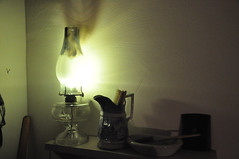
“Josephine had begged and pleaded and promised perfect behavior to Rosario. She only wanted one thing: to try peanut butter. Peanut butter made you American, made you strong, she reasoned. Rosario protested: too American, unnatural, expensive. But one week in October of 1931, the Home Relief Box contained a surprise – a jar of Skippy! It was the most delicious thing Josephine had ever tasted. She and Johnny ate one huge spoonful each the first day of the jar’s life in 97 Orchard, then carefully made it last until almost April of the next year. Not wanting to get rid of the jar, Josephine asked Rosario if she could use it. Si! She had just been given a kerosene lamp top by a woman at work whose husband made them, but didn’t have anything to use it with. The jar then lit the families’ late night stories, after they’d turned the lights off. The jar got tossed with the move out of 97 though, too much a symbol of sticky times.”

(c) Tenement Museum
Baldizzi’s School Books

“On the kitchen window sill sit books for Johnny and Josephine Baldizzi’s education. The proud parents bought them so their children would not have to use the books that were falling apart in the school. By buying the books, the parents could also have their children do homework and read at home. As Rosario bustles around the kitchen, Johnny and Josephine sit at the desk reading in between numerous distractions.

The primers and normal readers allow the children access to America. Here in the Baldizzi apartment, the school books show everyone the hopes and aspirations that Rosario and Adolfo have for their children. When the children finish, the parents may peruse the books, picking up useful words and phrases. It is a bittersweet moment, though, as they realize all their children will learn and know. The struggle of immigration becomes comprehensible and worthwhile in those fleeting moments – staring at the foreign words on the page.”

Fannie Rogarshevsky’s New Bissell’s Grand Rapid Vacuum

Photo Credit: Keiki Niwa
We imagine Fanny as an amazing housekeeper, but I think of her as a sap for new cleaning innovations. Each week, it’s a new purchase: powder/disinfectant, lino-wash.

"Oh no. The day this came home.

After repeated protestations to Abraham and family that they NEEDED a vacuum, that all of her friends had them (even though her son, Sam was the first to point out they didn’t have a rug), even though Ida said they had a Bissell’s at the factory and it was a piece of junk, the family finally caved.

It cost $65.

When it arrived, everyone crowded around it. Fanny had just cleaned, so there was nothing to vacuum up. “What are we going to do?” they all cried. A piece of bread was summoned. But it wasn’t stale enough. So they toasted it for a while so they could crumble it on the floor.

A pause.

A roll over the crumbs.

And the crumbs remain.

“It must have a switch wrong somewhere…” Hours disassembling and reassembling the Bissell. The crumbs remain. Finally, Fanny cleans them up with a wet rag, just as she always has done."

Rogarshevsky Family Toaster

Photo Credit: Keiki Niwa
“Hanging on the wall above the stove in the Rogarshevsky apartment is a metal circle with holes in the bottom and four wire sides that connect to form a base. People often ask about this object, which I have imagined to be a toaster. I imagine that this wasn’t a very expensive item. It could probably be purchased in a 'hardware' store, some place that sold metal items. Perhaps it was something made locally and sold everywhere. It doesn’t seem important enough to bring from the home country.

Because it’s a rather small object, I don’t imagine the neighbors having much interest. Maybe one of the other women in this building suggested that Fannie should purchase a toaster. Maybe it was seen as a time saver. Maybe the same woman suggested which shop or peddler had the best price.

It’s not a special object. It’s not something to be passed on from one generation to the next. Perhaps for this family it meant that they were settling in to their new American lives and schedules.”

Natalie Gumpertz’s Clock

(c) Tenement Museum
"Natalie was beside herself as she watched from the carriage her home fade into the distance. She had sold all her belongings in the past days and now had enough money for her journey to America.

In America, Natalie felt scared, but she was getting more accustomed to life here every day. Her neighbors all spoke German, although many didn’t speak her dialect. Mr. Glockner’s wife was Prussian and had a close friend, who introduced her to some young men, potential suitors, although she was staying with her cousin and didn’t have much room to herself. She enjoyed shopping and thinking about a home for herself.

She walked by William’s Clockworks that week and something caught her eye. It was a clock, a clock that reminded her of her grandmother’s home in Prussia. As the wave of nostalgia passed over her, she knew she had to buy it. She took out her small savings and went into the store.

For years Natalie had kept the clock inside her suitcase covered in cloth. But today was the day she would take it out. She and Julius had just married, and Mr. Glockner had an apartment in his building for them. Finally, a home."


What’s your favorite object from 97 Orchard Street? Share your own object biography with our readers.

-posted by Shana Weinberg

Friday, August 27, 2010

Rugs Installed in Gumpertz and Rogarshevsky Apartments

Have you ever wondered if the residents at 97 Orchard would have had bare floors or rugs? We've found evidence that suggests residents may have had rugs (in, for example, the front room of apartment 8, the Rogarshevksy residence). With that information in mind, rugs were recently installed in the front rooms of the Gumpertz and Rogarshevsky apartments. They are both reproduction carpets that are true to the period, made in the same way they would have been made at the time. In addition to making the recreated apartments look more authentic, the rugs also provide valuable protection for the wood floor against wear and tear from foot traffic.

The rug in the Rogarshevsky apartment is a rag rug, woven of scrap fabrics, perhaps by another tenement dweller in the area who made them as part of a "cottage industry"-style business. It is woven of three pieces, each three feet wide and hand stitched together.


The rug in the Gumpertz apartment is an ingrain carpet, made of two pieces, each four feet wide.

Special thanks to Dave Favaloro and Bayard N. for their help with the installation.

-posted by Derya

Wednesday, August 4, 2010

Donor to the Collection: Mr. Allan J. Madansky

Often visitors ask us about the furnishings in the recreated exhibit apartments. Where did we get them? Did they belong to the actual family who lived in the apartment? In a nutshell, we conduct extensive research on the family and use what we learn to create a “historic furnishings plan.” This document includes an inventory of everything the family would have had in their home, down to the number of spoons. Once the furnishings plan is complete, museum staff search auctions, estate sales and flea markets for the items. Most of the time we purchase the items, but every once in a while, someone will offer to donate an item that we can use in a recreated apartment. This was the case earlier this year when I got a call from Allan Madansky.

Mr. Madansky’s mother, Chana Bias Meir, immigrated to the Lower East Side from Minsk about a hundred years ago. She was originally from Poland, but lived in Minsk for a while until she came to the United States. On the Lower East Side, she lived at 11 Henry Street and used a wooden butchering board to prepare her kosher meats at home. Meat would be placed on the slats and fluids would drip into the white, enameled tray at the end.

Collection of the Lower East Side Tenement Museum
After his mother passed, the board came into the possession of Mr. Madansky, who hung on to it over the years. After visiting the Tenement Museum, he decided to offer the board to the museum for use in the Rogarshevsky Family apartment. The Rogarshevsky Family lived in 97 Orchard Street during the same time that Mr. Madansky’s mother lived on the Lower East Side. We know that Fannie Rogarshevsky, the matriarch of the Rogarshevsky Family, kept a kosher house, and we even have a metal pail she used for koshering meat that was donated to the museum by her family.

After visiting Mr. Madansky at home and picking up the board, I brought it back to the museum for cataloging. Soon it will be on display in the kitchen of the Rogarshevsky Family Apartment, which is on the third floor of 97 Orchard Street and visible as part of our Piecing it Together Tour.

-Posted by Derya

Friday, July 30, 2010

Announcing the SNAPSHOT! Photo Contest finalists!

Thank you to all of the amazing photographers who joined us for SNAPSHOT! A Tenement Museum Photo Event to celebrate the launch of our new photo database. In case you missed it, on July 20, 2010, photo junkies and Tenement Museum fans were invited into 97 Orchard with their cameras to take photographs of the building's interior (something we normally don’t allow). We received a number of incredible submissions to the SNAPSHOT! Photo Contest, and you can see all of them by visiting the Tenement Museum’s Flickr group.

It was a difficult process, but we managed to select 11 finalists that we think capture the architecture of 97 Orchard and the tenement apartments inside. We hope you will help us pick a grand prize winner by checking out all of the finalists below (click on the thumbnails to view larger images) and voting, on the right, for your favorite!

Voting will end on Thursday, August 5, 2010 at 4:30 pm and the winner will be announced here on Friday, August 6, 2010.

Congratulations to all of the contestants and finalists!

Finalist 1:
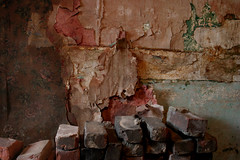
Unrestored apartment wall on the fourth floor of 97 Orchard Street. Photo by Dominic Poon.
History 4

Finalist 2:
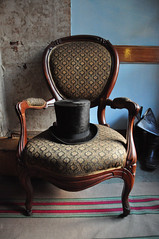
Front room of the recreated Moore Family Apartment exhibit c. 1869 on the fourth floor of 97 Orchard Street. Photo by Kathleen L. Kent.
DSC_0899

Finalist 3:
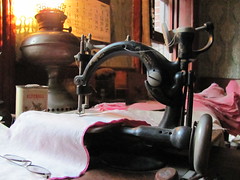
Sewing machine in the front room of the recreated Levine Family Apartment exhibit c. 1897. Photo by Sue Shea.
sewing machine

Finalist 4:
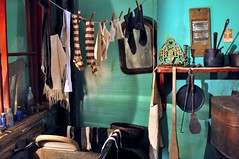
Kitchen of the recreated Levine Family Apartment exhibit c. 1897. on the third floor of 97 Orchard Street. Photo by Shawn Hoke.
Tenement Museum Striped Socks, 3rd Floor by Shawn Hoke

Finalist 5:
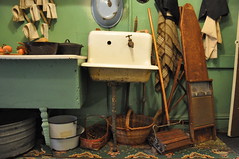
Kitchen of the recreated Rogarshevsky Family Apartment exhibit c.1915 on the third floor of 97 Orchard Street. Photo by Andrea Gaffney.
sink (4).JPG

Finalist 6:
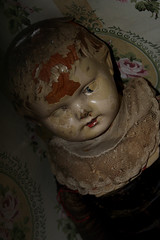
Antique doll in the recreated Gumpertz Family Apartment exhibit c.1878 on the second floor of 97 Orchard Street. Photo by Dominic Poon.
Doll

Finalist 7:
Kitchen in the recreated Gumpertz Family Apartment exhibit c.1878 on the second floor of 97 Orchard Street. Photo by Amy Neiman.
Photo by Amy Neiman, 7/2010

Finalist 8:
Kitchen of the recreated Moore Family Apartment exhibit c. 1869 on the fourth floor of 97 Orchard Street. Photo by Kathleen L. Kent.
DSC_0918

Finalist 9:
Front room of the recreated Moore Family Apartment exhibit c. 1869 on the fourth floor of 97 Orchard Street. Photo by Daniel Molina.
Tenament 25

Finalist 10:
Kitchen of an unrestored apartment on the second floor of 97 Orchard Street. Photo by Andrea Gaffney.
sink (6).JPG

Finalist 11:
Graffiti on the third floor hallway inside 97 Orchard Street Photo by Shawn Hoke.
Tenement Museum "Nuts to You," 3rd Floor Hall by Shawn Hoke

-posted by Amita

Wednesday, July 14, 2010

Meet Judith Levin, for Live! At the Tenement

I recently got the chance to speak with Judith Levin, a costumed interpreter in the Live! At the Tenement program. She told me a little bit about her character and the program, which runs until July 29th. You can see Judy in action tomorrow evening at Live!.

Can you tell me about who you’re portraying here at the museum?

I’m portraying Fannie Rogarshevsky. Mrs. Rogarshevsky came to the United States from Lithuania in 1901 with her husband, Abraham, her children, and a niece who gets palmed off on her parents who already live here. Her brothers already live here and by the time she and Abraham move to 97 Orchard Street, they’ve come from just down the street. They’ve come from another pre-old-law tenement that probably might have just been about to undergo renovation. So they come here and they’ve got six children, two of whom were born down the street, ranging in age from a little child to teenage girls. About half the family is working in the garment industry. So by 1910, she’s got kids working and has just married off a kid, her daughter Bessie, to a border of her parents, and they’ve moved across the street and produced two kids fast.


When you’re portraying her, how do you make the character as accurate as possible?

I have a sense of who she is from the way she looks in pictures, from the history of her children – if they go away, they move back soon. The grandchildren remember her yelling out the back window, telling the bums to go sleep somewhere else. She’s a woman who loses her husband when her husband is quite young, in his early 40s, from tuberculosis. And she becomes the janitor of this building in order to keep a roof over her family’s heads. She is a big, tough lady.

What I try to balance is the sense that she’s a baleboosteh, a boss, a big tough mama. On one hand, she has a very complicated life. These people are not as successful as the Levines [another family interpreted at the Tenement Museum and on Live! at the Tenement] are going to be. They’re not going to wind up living in a nice neighborhood. But she’s kept most of her kids alive, and they come back, and she wants them near her. There’s a story that when one of the daughters moves to the apartment behind this apartment that Fannie sends the Sabbath meal on the clothesline across to a daughter who had been married and living in the Bronx but moved back here during the Depression.

So these stories are going through your head when you’re in character?

Yes, from photos and from the memories of children and grandchildren. We know more about this family and what they’re like than, say, the Levine family because we have the memories of one of the sons, Henry, from when he was quite an old man, who could tell us where everybody slept, which is what everyone always wants to know and what we almost never know for sure about these early families.


From there, how do you try to engage your audience?

I want people to respect her. I don’t think she was having a great time. People have commented on how cheery these characters are but I don’t think she was a very cheery person. But she was very proud of the home she had made, so it is very interesting to have people come into this space that she inhabits with this family. They come in and they often say, “Oh, this family has money. Look at all this stuff they have. They don’t have a factory in the living room.” And I say, “Yeah, but they had six children.”

She was very proud of the things she had here. A working family in the old country did not have a room that looked like a living room, even if it turns out you’ve got four boys sleeping in it every night using the couch as a pillow. And what we know from family memories is that she was proud of the furniture, and we were able to replicate that. Our sense is that she’s buying furniture secondhand and, to her, it’s fancy. It’s what the nice people uptown would have had because it’s carved and it’s upholstered, and the headboard of the bed is solid wood. It’s also all about forty years out of date.

She comes to 97 Orchard Street, and they have running water, which she’s never had before. She’s a house-proud woman. She has lights for the first time. You can see the dirt and that helps. If you can’t see it, it’s harder to clean.

So I’m always trying to balance the ways in which she was very proud of what she had achieved and on the other hand, the fact that this is a woman who’s getting down on her hands and knees to scrub the toilets of her neighbors every week.


Do you find it gratifying to be a costumed interpreter? Is it fun?

I find it exciting and difficult and interesting enough that I want to keep doing it. What it’s done is that, being Fannie, spending time in that apartment, and thinking as a member of that family with those responsibilities, I do a different tour. So when I move to the role of educator, there’s a part in my head that’s Fannie’s voice understanding what that couch meant to her. Now, after a lot of years at the Museum, that’s one beat up couch. But for her, it’s the symbol of this life that she has made here. However poor that life seems and was, they’re making themselves American. It’s an Orthodox family. They don’t want to give up who they are. They don’t want to become American in that way, yet she’s also very proud of what they have here.

She’s the last person to ever live in this building. When everyone moves out, Fannie is living here in 1941 with her youngest son Philip and his wife. Only at age 68 does she move into government-supported housing where there’s hot water. So for some reason, she’s hanging onto this place where so much of her life had been. She’s the center of a world that includes her parents in the building, and her brothers who sound like fruit sellers to me, on a small scale, in the neighborhood. She knows everybody and I think she’s trying to run all their lives. So it changed my sense of how to give that tour.


Meet Judith Levine - as Fanny Rogarshevsky - tomorrow evening. For tickets, visit www.tenement.org.

- Posted by Joe Klarl

Thursday, December 3, 2009

A Personal Connection to 97 Orchard Street...

Read this thoughtful commentary piece from a decedent of the Rogarshevksy family, published in the East Hampton Star...

Other Lives
Last month, after years of thinking about it, my husband and I toured the Lower East Side Tenement Museum at 97 Orchard Street in Manhattan — a building where my Aunt Miriam lived once and apparently had hated every minute of it.

[Continue Reading]